Residual chlorine is the cause of carcinogens (total trihalomethanes)
Did you know that the chlorine injected to disinfect tap water creates carcinogens? Among these, the final process before sending purified water to homes is chlorine disinfection.
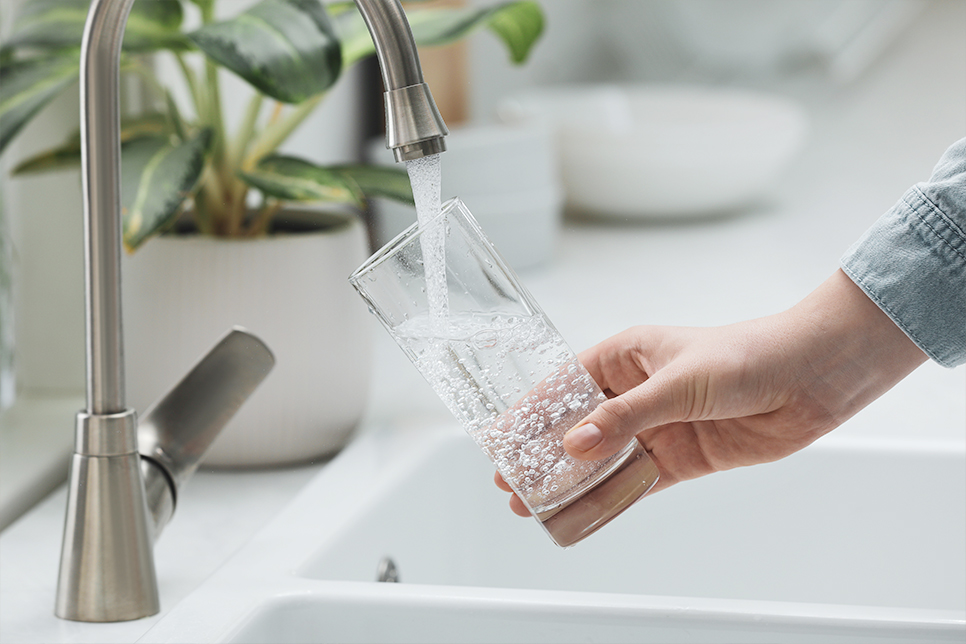
In addition, Korea's water law stipulates that the residual chlorine in tap water should be 0.1 mg (microgram) per liter of tap water until it reaches the home, making chlorine disinfection mandatory.
The problem is that the chlorine injected into the water to disinfect tap water creates substances called total trihalomethanes (THMs), which are internationally recognized as carcinogens. The process by which chlorine produces carcinogens is as follows.
Chlorine injected into tap water sterilizes germs such as bacteria present in tap water, but the sterilized bacteria remain as residual organic substances such as proteins, carbohydrates, and fat.
In addition, organic substances exist not only in sterilized bacterial residues but also in water pipes.
When chlorine comes into contact with organic substances, a chemical reaction produces a representative disinfection by-product called total trihalomethanes (THMs).
Total trihalomethanes (THMs) produced by chlorine, such as chloroform, bromodichloromethane, dibromochloromethane, and bromoform, are substances harmful to the human body and are internationally recognized as carcinogens.
The effects of total trihalomethanes on the human body are as follows.
- ORP (oxidation reduction potential) increases due to an increase in harmful oxygen radicals, causing skin and hair damage when showering.
- Cell damage occurs by destroying vitamin C when it touches the skin or enters the human body.
- Causes carcinogenesis when drinking water containing trihalomethane above the standard level
Methods for removing total trihalomethanes include UV disinfection and storing them with the lid open for more than 1 day, but these are difficult to apply in practice, and the most effective method recognized internationally is removal using activated carbon (charcoal). Here's how.
Josem M. Price, a medical doctor at the University of Michigan in the United States, introduces the following in his book “Chlorine is the culprit.”
“As long as you drink chlorine-free water, you can eat anything without fear of a heart attack or related diseases. There is no need to choose eggs, sausages, bacon, butter, beef, pork, etc. These are not only good natural foods, but they are also good for our bodies.
Just avoid chlorine in water.
Synotex water purification filter is a product that uses a natural palm charcoal filter made from natural palm trees and compressed to high strength, and has a residual chlorine removal rate of over 99%.
We hope you can live a healthy and happy life without worrying about residual chlorine and total trihalomethane, a carcinogen, with Sinotex water purification filter.
Purchase a Synopex water purification filter that optimizes Synopex’s excellent water purification technology for home use.